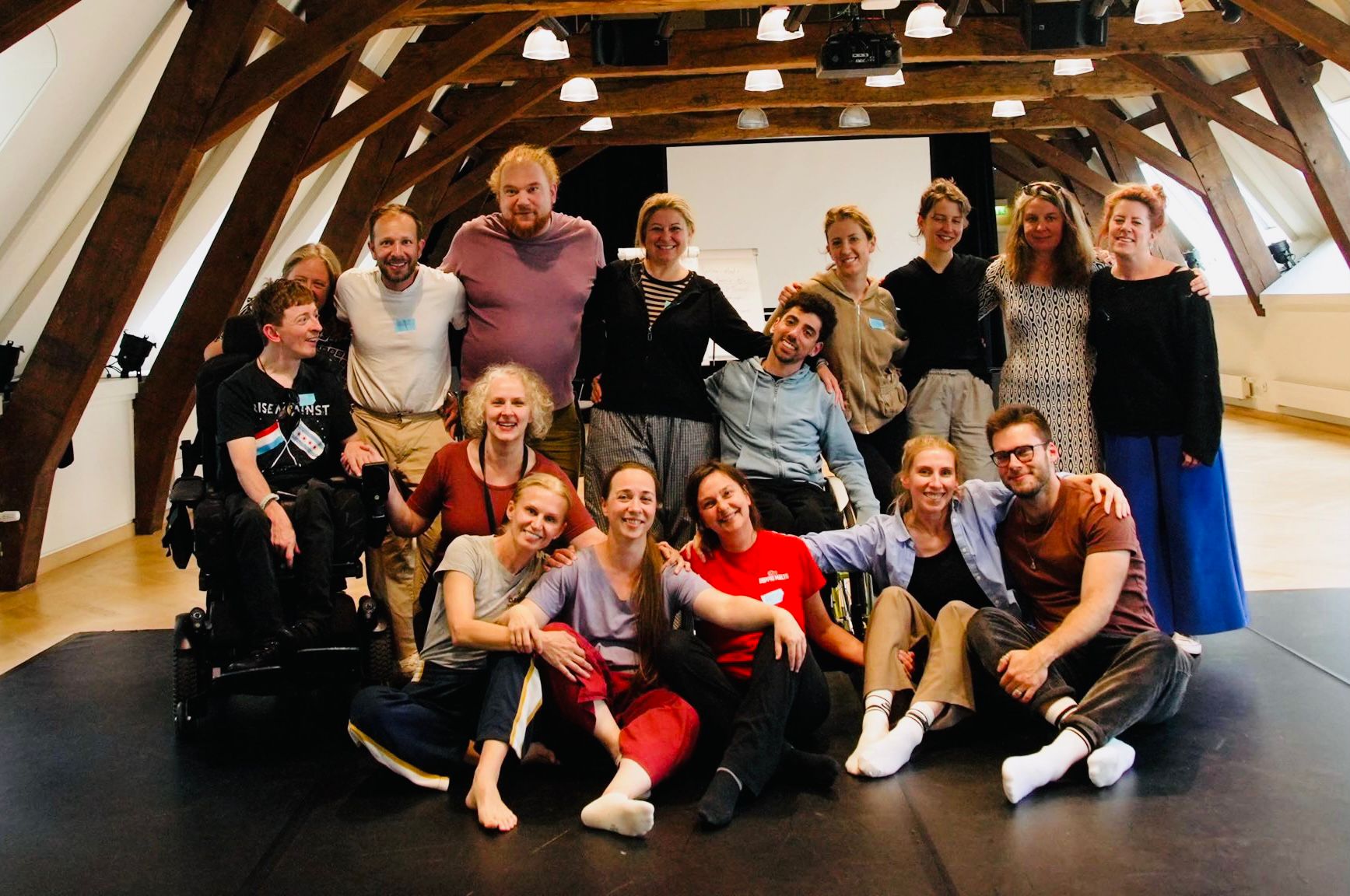
Reimagining Tales: Inclusive Narratives in the European Performing Arts for Young Generations is a 24-months project co-funded by the European Union running from February 2026 to January 2028. The project challenges the exclusion of marginalized children and young people—especially disabled, d/Deaf, neurodivergent, racialized, and gender-diverse youth—from performing arts and cultural narratives.
ArteVOX Teatro (Italy) leads the project, specializing in visual and puppet theater, making performances accessible to neurodivergent and d/Deaf children.
Kopla Bunz (Luxembourg) creates interdisciplinary works blending music, dance, and theater, with a focus on multilingual storytelling and inclusive, community-based projects.
Dansema Dance Theatre (Lithuania) is a pioneer in contemporary dance for young audiences, specializing in movement-based and sensory-friendly performances for children with developmental and visual disabilities.
1 - Inclusive Artistic Residencies: Three artistic residencies (Italy, Luxembourg, Lithuania) where professional artists will create new performances for young audiences. A traditional tale for children will be reworked through disability-led, anti-ableist, and intersectional lenses.
2 - Accessibility as Aesthetics: Accessibility tools (such as sign language, audio descriptions, tactile scenography, relaxed performance principles, sensory dramaturgy) will be used as core creative elements from the start.
3 - Local Focus Groups: Each residency includes a focus group with marginalized children and young people, who provide feedback and lived perspectives as dramaturgical advisors.
4 - Capacity-Building Workshops: International “train-the-trainer” workshops will support artists, educators, teachers, and cultural programmers to develop inclusive dance and theatre practices for their own contexts.
5 - Creation of a multilingual, accessible toolkit and methodology pack featuring case studies, templates, and practice-based recommendations designed for easy replication across different contexts.
CLICK HERE TO READ THE FULL PROJECT ON EUROPEAN COMMISSION WEBSITE
The International Advisory Board. is a small group of disabled and marginalized professionals who act as the project’s ethical, political, and artistic compass. The IAB Members: offer strategic advice and critical reflection throughout the project, help ensure the project remains anti-ableist, intersectional, and disability-led, provide feedback on artistic processes, accessibility choices, and ethical questions and advise on the development of the Methodology Pack.

Angela is a Malta-based performer, writer & advocate with Down Syndrome. She holds a BA in Creative Arts, an Advanced Diploma in Performing Arts, & Diploma in Community Access for Disabled People. Her artistic development has been shaped by training opportunities abroad including a danceWEB scholarship to ImpulsTanz Festival Vienna, residencies and Erasmus programmes in Venice, London, Sweden & Greece, including with Skanes Dansteatre, Chickenshed Theatre & Stopgap Dance Company. She has performed in mixed-ability work in Malta, Italy, Germany, Sweden & Sri Lanka. She has received a University of Malta Social Commitment Award for her contribution to the arts and in making the arts more accessible.
Europe Beyond Access introduces Angela Bettoni - YouTube
Instagram - @angelabettoni18
Facebook - Angela Bettoni

April Bracken is a neurodivergent theatre artist and facilitator based in Dublin, Ireland. April aims to create inclusive spaces for young people where they can experience moments of joy, connection, and wonder. April has just completed creating Free As A Bird, an intimate performance for young audiences with complex needs. The process included in-depth creative consultation with students from a local special school. As a member of the board, April is delighted to share her lived experience as both a neurodivergent artist and as a creative navigating the process of making work for young, disabled audiences.
Instagram @aprilbrackenartist
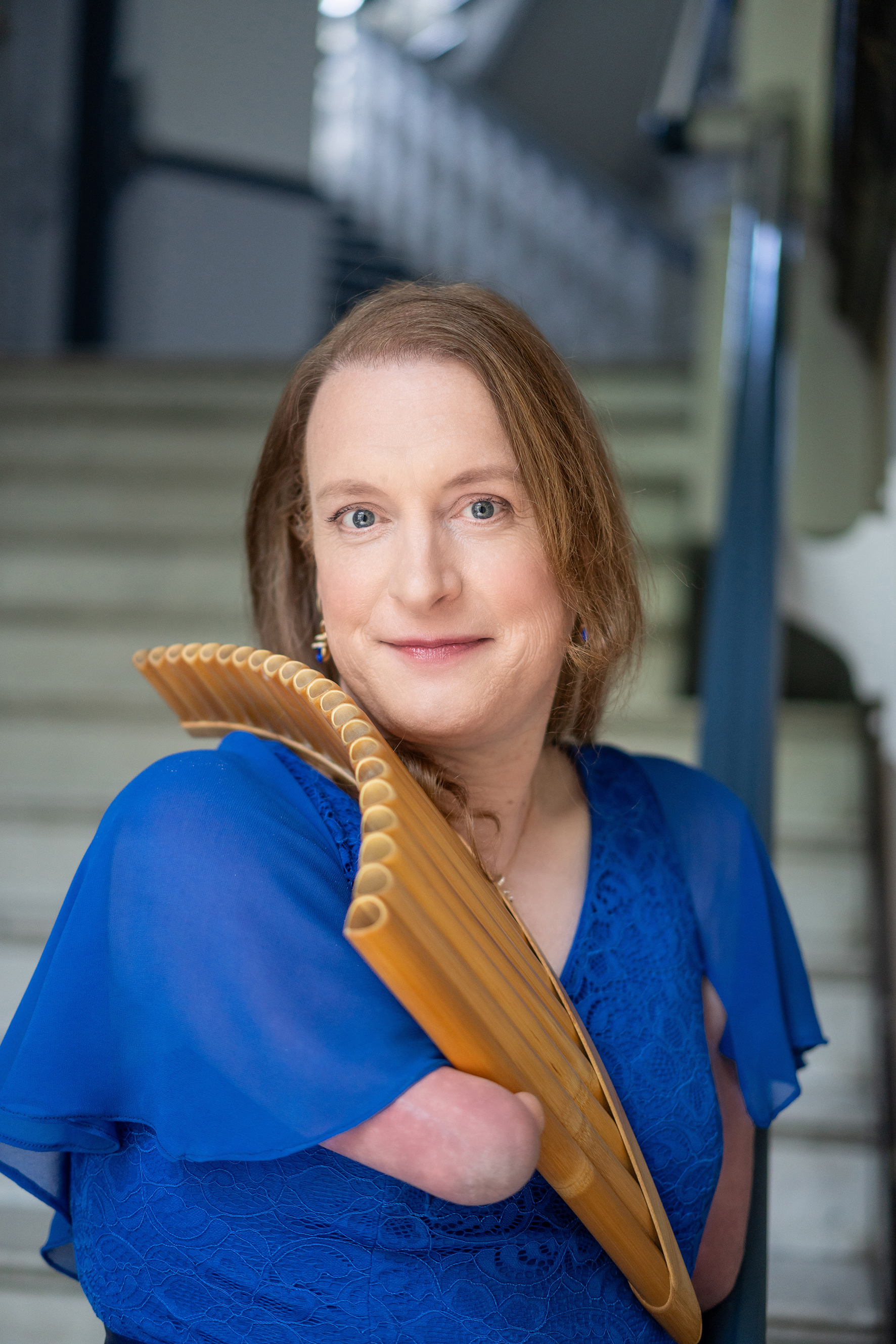
Hannah Schlubeck is considered one of the world's leading panflute players, especially in interpreting classical music on the pan flute.
She is the first musician in Germany with a university degree in the main subject of the panflute. and also received lessons from Romanian pan flute legends such as Gheorghe Zamfir.
In more than 35 years, she has given almost 2000 concerts in churches and concert halls such as the Elbphilharmonie Hamburg, the Philharmonie and the Konzerthaus Berlin and many more.. Concert tours took her to European countries, the USA, Latin America and Australia.
As a soloist she performed with the Rundfunk Sinfonieorchester Berlin (RSB) and the NDR Radio-philharmonie, among others.
Regularly, she works together with the Klezmer-Ensemble Mischpoke Hamburg.
Schlubeck has released 18 albums on her own label. She participated in numerous radio and television productions.
She has been involved in children's programs, including KAPellina concerts of the Kammerakademie Potsdam and projects by "Kopla Bunz". In February 2026 she presented her new program „Schubladendenken" in which she deals not only musically with humour, but also informatively, with clichéd thinking, prejudices and many situations from her life as a panflutist and disabled trans* woman.
Foto credits: Stefan Maria Rother
Website: www.schlubeck.de
Youtube: https://www.youtube.com/@SchlubeckPanfloete
Instagram: @hannahschlubeck
LinkedIn: https://www.linkedin.com/in/hannah-schlubeck-4910b9167/
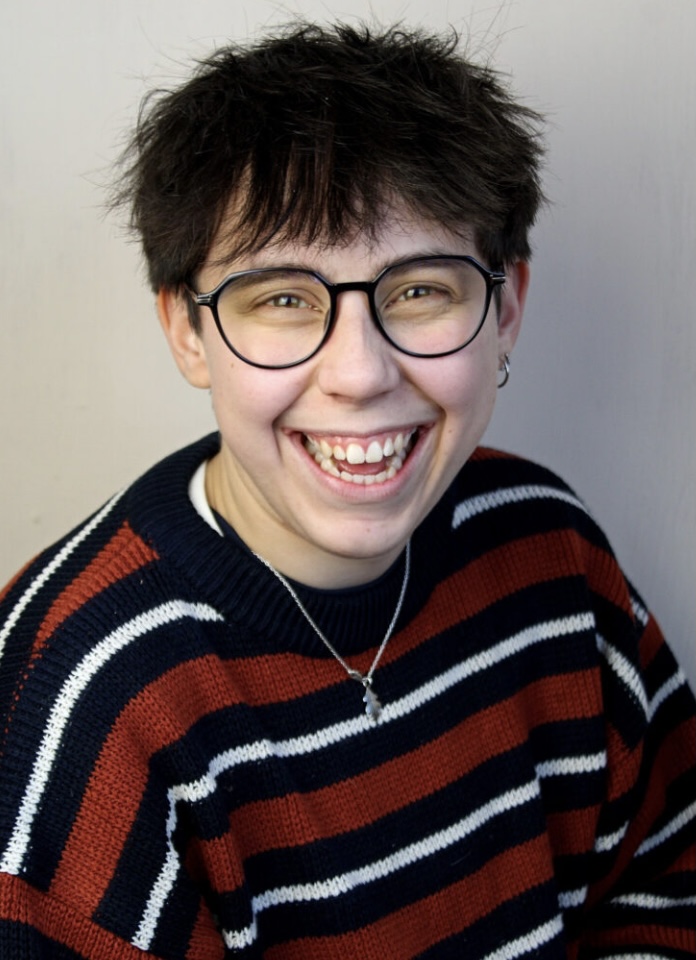
Lou is a young neurodivergent actor, musician and facilitator based in Leicester, England. They use their own lived experience of neurodiversity and queer identity to create accessible and safe creative spaces of exploration and imagination.
Lou is passionate about the transformative power of accessible theatre on both the young people they work with, and themselves as a young artist and person exploring life.
Lou explores the power of connection, representation and self-discovery through their own fascination in folk music and storytelling. Their work is entirely centred around the want to create spaces that they needed as a child.
Instagram - @lou.pidgeon

Liba has more than 15 years of experience in non-formal education, working in several non-governmental organizations, mainly related to the topic of art and inclusion. Liba is also an art therapist and designer. She has also obtained a certificate as an accessibility expert. Liba has extensive experience in working with mixed groups - people with movement, vision, hearing and mental disabilities in various environments - both in art therapy and non-formal education. Liba collaborates with various contemporary art institutions in Latvia, to promote an accessible and inclusive cultural environment in Latvia. Also working with international projects. Especially Liba loves to work with international projects. She is member of advisory board in project "Reimagining Tales", where she advises how to work with different audiences and involve communities.
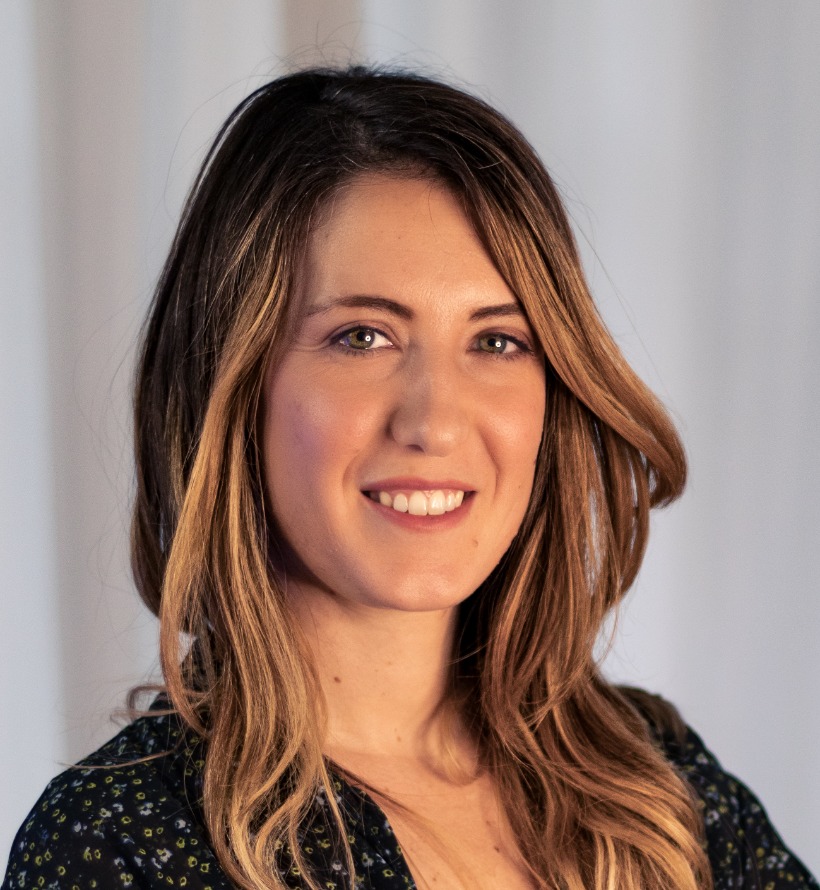
Stefania Di Paolo is a cultural curator, accessibility consultant, and disability advocate working across performing arts and inclusive cultural programming. She holds a PhD in Performance and Cultural Industries (University of Leeds - UK) and works with Hangar Piemonte as an accessibility and cultural programming consultant, and with Scuola Nazionale del Patrimonio e delle Attività Culturali as a Strategic Development Assistant supporting partnership development and cultural project coordination.
She collaborates with dance institutions, theatre companies, and artists to embed accessibility as a core artistic and organisational practice. Stefania has also served as a Board Member of Candoco Dance Company. As Chair of the International Advisory Board for Reimagining Tales, she supports the project in grounding its work in anti-ableist and intersectional practices.
a project by ArteVOX Teatro
in collaboration with Dansema Dance Theatre (Lithuania) and Kopla Bunz (Luxembourg)
co-funded by European Union within the project Creative Europe - CREA CULT 2025 COOP
Views and opinions expressed are however those of the author(s) only and do not necessarily reflect those of the European Union or the European Education and Culture Executive Agency (EACEA). Neither the European Union nor EACEA can be held responsible for them.
Marta Galli, Project Manager
Stefania Di Paolo, Project Manager and project advisor
Morea Francesca Velati, project officer
Anna Maini, Playwright
Nadia Milani, Director
Camilla Bisaggio, Communication and Accessibility manager
Chiara Lusetti, Administrative manager







.png)

